
Understanding the Difference Between DA, CC, and CDC Approvals in NSW
When undertaking a building, renovation, or development project in Sydney and across NSW, understanding the different approval pathways is essential. Selecting the correct approval process early can help avoid delays, redesign costs, compliance issues, and unnecessary stress during construction.
Many property owners, builders, and developers are confused by the differences between Development Applications (DA), Construction Certificates (CC), and Complying Development Certificates (CDC). While these approvals are connected, each serves a very different purpose under the NSW planning and building framework.
As experienced building consultants in Sydney, AUSSURE regularly assists clients with navigating DA approvals, CC approvals, CDC approvals, council requirements, and private certification processes across residential and commercial developments.
This guide explains the key differences between DA, CC, and CDC approvals in NSW and helps determine which approval pathway may suit your project.
1. Development Application (DA)
A Development Application (DA) is a planning approval submitted to the local council for assessment. It is generally required when a proposed development does not fully comply with the strict standards for complying development under NSW legislation.
A DA is assessed through a merit-based planning process, meaning the council evaluates the proposal against planning controls, neighbourhood impact, and site-specific conditions.
DA approvals typically assess compliance with:
Local Environmental Plans (LEP)
Development Control Plans (DCP)
Land zoning requirements
Building height controls
Floor Space Ratio (FSR)
Setback requirements
Heritage considerations
Streetscape impact
Environmental impacts
Privacy and overshadowing
Traffic and parking requirements
Site constraints and topography
Unlike CDC approvals, councils have discretion during DA assessment and may approve projects with justified variations to planning controls.
Important Note About DA Approval
A DA is only a planning approval.
It does NOT permit construction work to commence.
After obtaining Development Consent, applicants must still obtain a Construction Certificate (CC) before any building work can legally begin.
DA approvals are commonly required for:
Large residential developments
Duplexes with planning variations
Multi-dwelling housing
Commercial developments
Heritage-listed properties
Complex renovations and extensions
Projects exceeding CDC standards
2. Construction Certificate (CC)
A Construction Certificate (CC) is a technical construction approval confirming that the approved plans and specifications comply with all relevant building regulations and construction standards.
A CC verifies compliance with:
National Construction Code (NCC)
Building Code of Australia (BCA)
Australian Standards
Structural engineering requirements
Fire safety regulations
Waterproofing standards
Energy efficiency requirements
BASIX commitments
DA consent conditions
Health and safety standards
The purpose of the CC process is to ensure the development can be safely constructed in accordance with approved plans and regulatory requirements.
Who Can Issue a Construction Certificate?
A Construction Certificate may be issued by:
A private certifier
The local council
Private certifiers are often preferred because they can provide faster assessment and streamlined approval coordination.
Important Note About CC Approval
Construction work cannot legally commence until the Construction Certificate has been issued.
Mandatory inspections will also occur throughout construction to ensure ongoing compliance with approved documentation and building regulations.
Typical inspection stages may include:
Footings and slab inspections
Structural frame inspections
Waterproofing inspections
Stormwater inspections
Final occupation inspections
3. Complying Development Certificate (CDC)
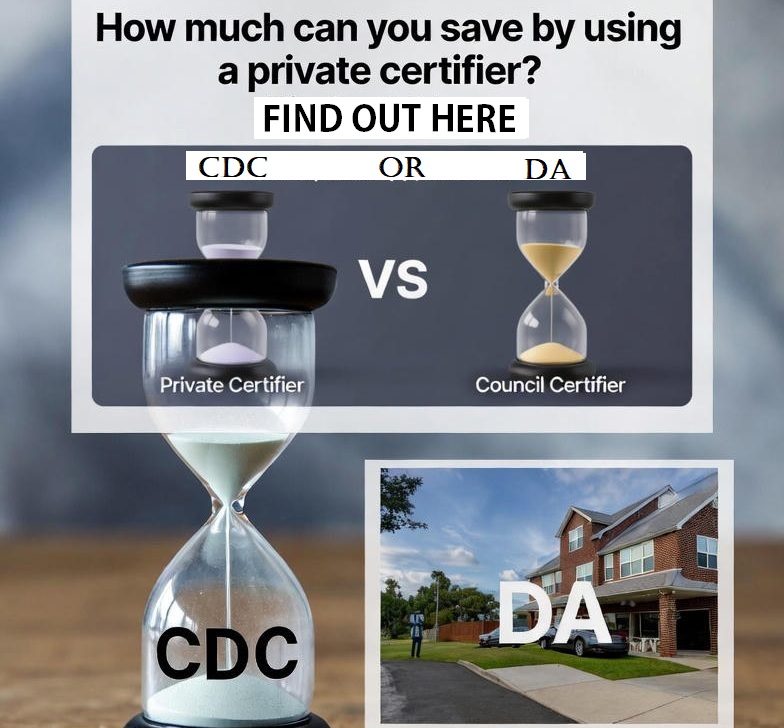
A Complying Development Certificate (CDC) is a fast-track approval pathway introduced by the NSW Government for straightforward developments that fully comply with pre-determined development standards.
Unlike a DA, a CDC is not assessed on merit.
Instead, it operates as a checklist and rule-based approval system under the:
State Environmental Planning Policy (Exempt and Complying Development Codes) 2008
NSW complying development framework
A CDC combines:
Planning approval, and
Construction approval
into one single approval process.
Because the process is rule-based, developments must comply 100% with all prescribed standards to qualify.
Even minor non-compliance may require the proposal to proceed through the full DA pathway instead.
Key Features of CDC Approval
Faster approval process
No merit-based council assessment
Combined planning and construction approval
Can often be approved within days or weeks
Typically issued by private certifiers
Reduced approval complexity for compliant projects
Common Projects Suitable for CDC Approval
Projects commonly approved under CDC include:
New dwelling houses
Granny flats
Home extensions
Swimming pools
Detached garages
Secondary dwellings
Internal renovations
Some commercial fit-outs
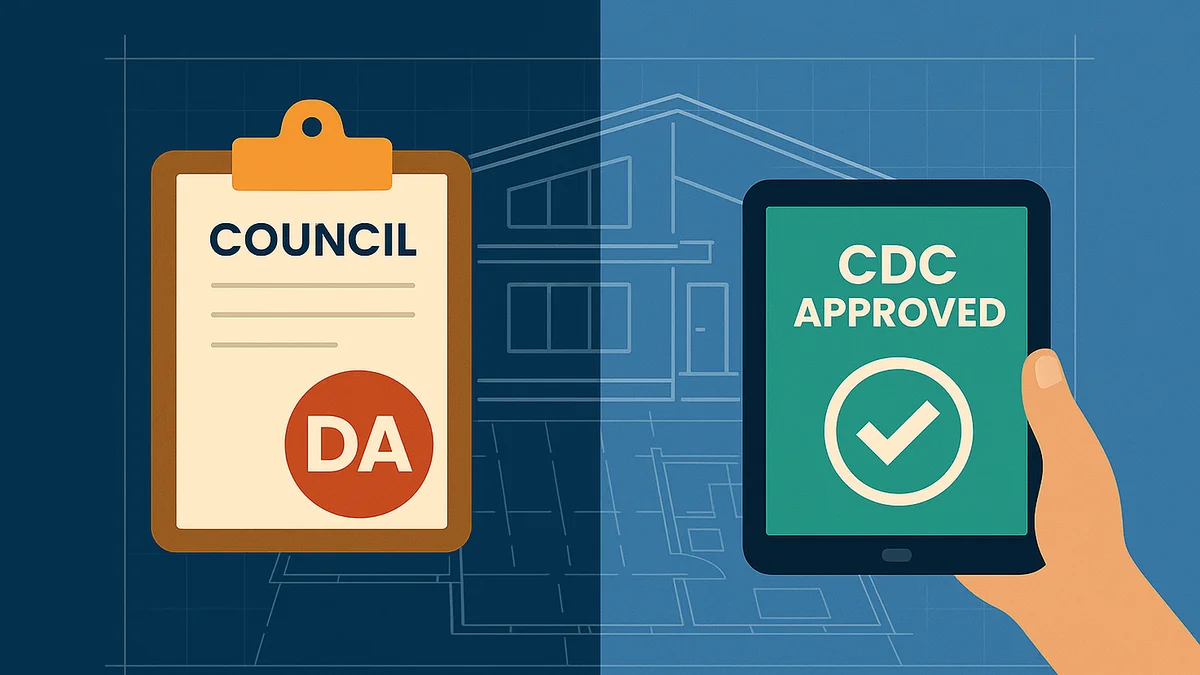
Key Differences Between DA, CC, and CDC Approvals
| Approval | Purpose | Best For |
|---|---|---|
| CDC | Planning + Construction Approval | Simple compliant projects |
| DA | Planning Approval | Complex developments |
| CC | Construction Approval | Required after DA approval |
Which Approval Pathway is Right for Your Project?
The appropriate approval pathway depends on several factors, including:
Project complexity
Site constraints
Zoning controls
Design compliance
Heritage restrictions
Development standards
Budget and timeframes
CDC May Be Suitable If:
Your proposal fully complies with NSW CDC standards
You want faster approvals
The project is relatively straightforward
No planning variations are required
DA + CC May Be Required If:
Your project does not meet CDC standards
Planning variations are needed
The site has constraints or heritage issues
The development is larger or more complex
Council merit assessment is necessary
Early assessment by experienced building consultants can help identify the most efficient approval pathway before significant design costs are incurred.
Common Approval Mistakes to Avoid
Property owners and developers often face delays because of:
Incorrect approval pathway selection
Incomplete architectural documentation
Non-compliant building design
Ignoring LEP or DCP controls
Missing BASIX requirements
Inadequate engineering documentation
Unapproved design changes during construction
Professional planning and compliance advice early in the process can significantly reduce these risks.
How AUSSURE Can Help
As a trusted building consultancy in Sydney, AUSSURE provides expert support across all stages of the building approval process.
Our services include:
Determining the best approval pathway for your project
DA application preparation and lodgement
CDC approval assessments
Construction Certificate applications
Private building certification
Building code and NCC compliance advice
Design reviews and pre-lodgement assessments
Council approval support
Residential and commercial building approvals
Resolving compliance issues quickly and efficiently
Whether your project is located in Sydney CBD, Parramatta, Western Sydney, Northern Beaches, Eastern Suburbs, Hills District, Inner West, Sutherland Shire, or anywhere across Greater Sydney, our experienced consultants help simplify the approval process and guide your project toward successful approval outcomes.
Conclusion
Understanding the differences between DA, CC, and CDC approvals is essential for achieving efficient and compliant building approvals in NSW.
While DA approvals focus on planning assessment against LEP and DCP controls, CC approvals ensure construction compliance with the NCC and Australian Standards. CDC approvals provide a fast-track alternative for developments that fully comply with NSW Government complying development standards.
Choosing the correct approval pathway early can help save time, reduce costs, and avoid unnecessary complications throughout the development process.
If you require professional assistance with DA approvals, CDC approvals, Construction Certificates, or building compliance in Sydney, AUSSURE can help guide your project from concept through to approval and construction.